

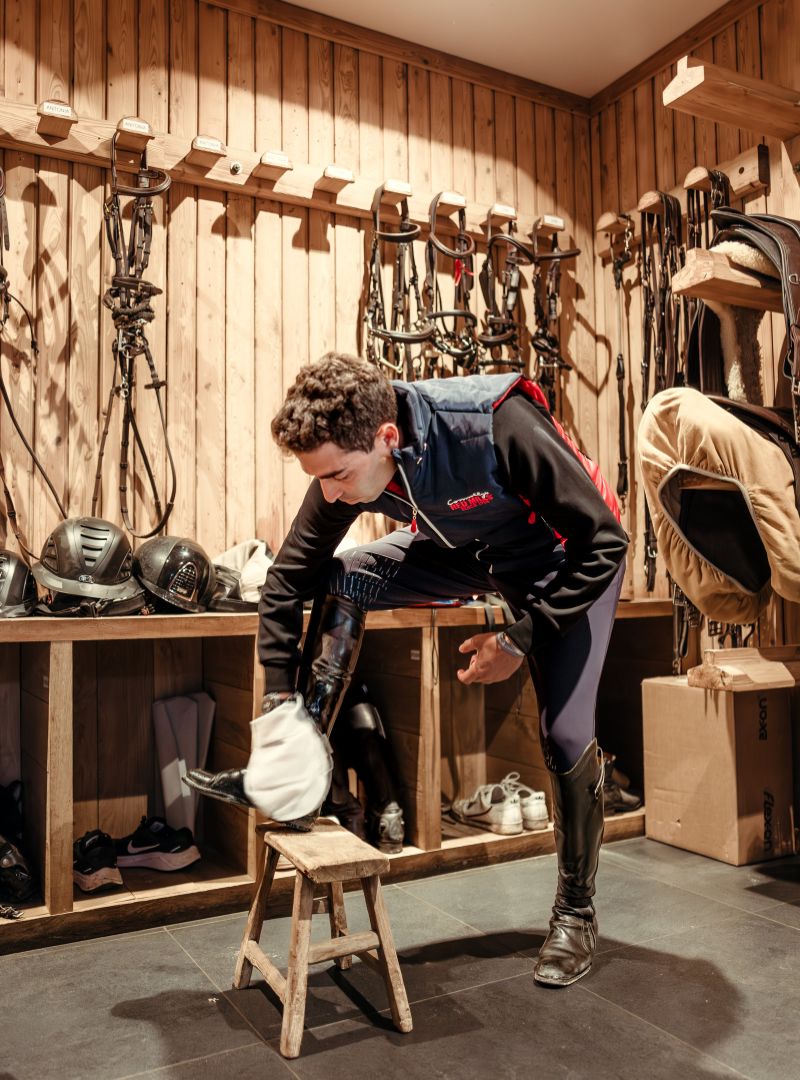
To keep your leather tack in top condition, it’s important to wipe down saddles, bridles, and other leather items after every ride. Sweat and grease contain salts that can break down leather fibers, so regular cleaning helps prevent long-term damage.
For deep cleaning, aim to thoroughly clean your tack every five uses. Whenever possible, disassemble your tack so each part can be cleaned individually—this ensures no dirt or grime is left behind.
Before conditioning your leather tack, always clean it first. Just like shampooing your hair before using conditioner, cleaning removes dirt and grease, allowing the conditioner to fully penetrate and nourish the leather.
View our full Leather Care range HERE
With the right maintenance routine, leather tack such as saddles and bridles can stay supple, functional, and looking great for many years — all while retaining its value and most importantly its safety.
Different types of leather finishes require different care methods. For instance, aniline leather is more porous and prone to staining. Using conditioners that contain dyes or heavy oils can permanently darken its appearance, so always choose products carefully.
In contrast, pigmented leather (often used in saddles and bridles) is more resistant to staining but less absorbent, especially when new. In this case, apply leather conditioner sparingly but regularly to keep the surface hydrated and prevent drying or cracking over time.
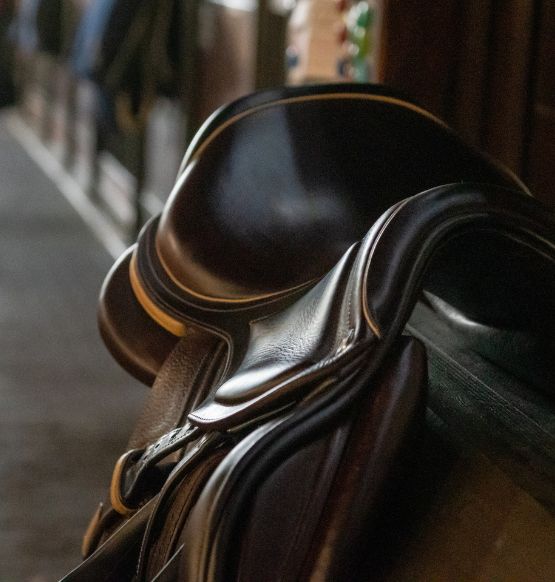
Daily Maintenance Clean
Clean Tack First: The Essential Step in Leather Care
Before conditioning leather saddles, bridles, or other tack, it’s crucial to ensure they are properly cleaned. After each ride, wipe down all saddlery items to remove sweat and grease, which contain salts that can dry out and damage leather over time. For best results, perform a thorough clean after every five uses.
When deep cleaning, disassemble your tack where possible so each piece can be cleaned individually. This helps remove built-up grime and ensures all surfaces are treated evenly.
Just like washing your hair before conditioning, cleaning your leather first allows it to fully absorb conditioners. Dirt and grease can block conditioning products from penetrating the leather, so starting with a clean surface is key to keeping your tack supple, strong, and well-maintained.
Belvoir Tack Cleaner Mitts: Quick, Safe & Effective Leather Cleaning
Belvoir Tack Cleaner Mitts are specially formulated to remove dirt, sweat, and grease from leather tack quickly and effectively — without over-wetting or damaging the leather. Unlike some cleaners that can saturate and weaken the material, Belvoir’s gentle formula helps prevent swelling of the collagen fibres, which can lead to stretching and long-term deterioration of your tack.
These convenient, quick-drying mitts, ensure the leather’s natural structure and stitching remain strong and intact. Ideal for everyday use, Belvoir Tack Cleaner Mitts make maintaining your saddles, bridles, and other leather gear both safe and effortless.
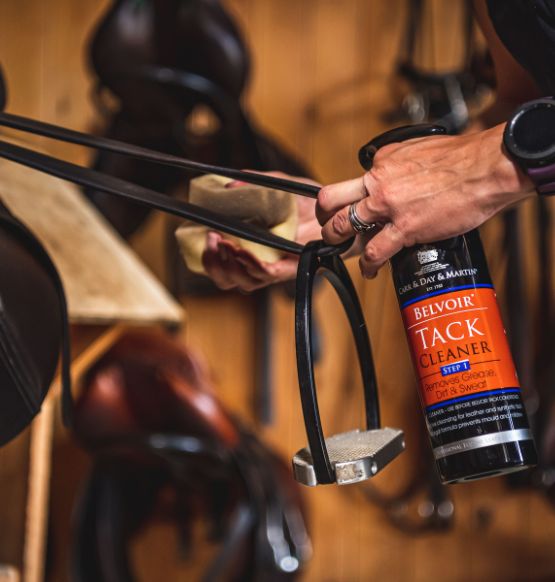
Belvoir Tack Cleaner Step 1 Spray: Clean, Inspect, and Protect Your Leather
Belvoir Step 1 Leather Cleaner Spray, a powerful formula designed to lift grease and grime without damaging stitching or drying out the leather.
If your tack is muddy, gently remove any mud first with a soft brush or cloth, being careful not to scratch the leather surface. Using a saddle cloth during every ride also helps absorb sweat and grease, keeping your saddle cleaner for longer.
Regular leather cleaning isn’t just about appearance — it’s also an essential part of horse tack safety maintenance. Take the opportunity to inspect buckles, straps, and stitching for signs of wear or damage. Addressing small repairs early helps prevent costly replacements and, more importantly, ensures your safety in the saddle.
Then condition…
YOU HAVE THREE CONDITIONING OPTIONS …
Once you’ve thoroughly cleaned your leather tack and it has completely dried, you may notice the leather looks lighter in colour and feels dry or stiff. This is a sign that it needs conditioning to moisturise, protect, and keep your leather soft and supple.
Three Effective Leather Conditioning Options
To restore your leather’s natural oils and maintain its durability, choose from these three conditioning methods:
Option-A
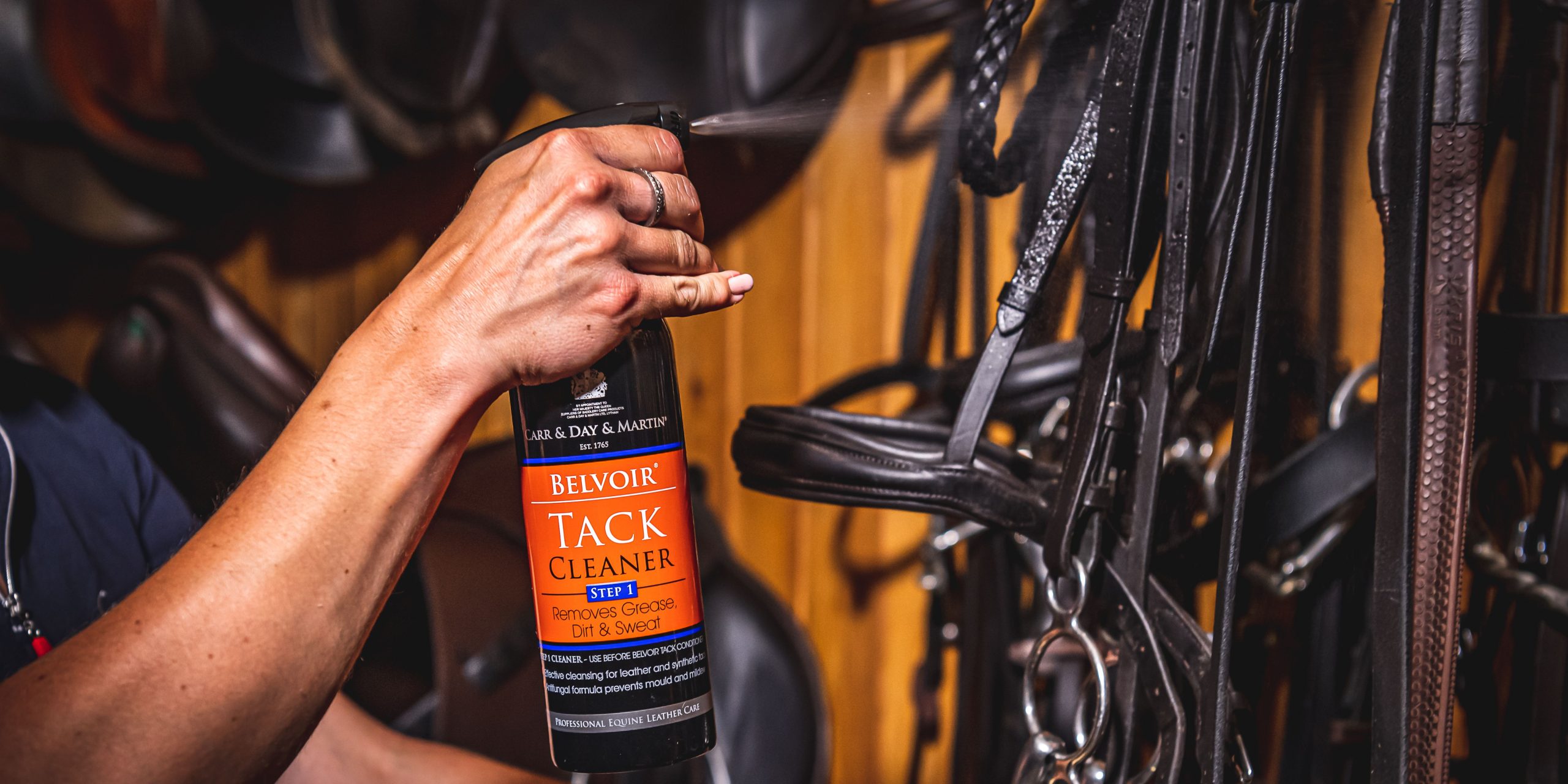
Belvoir Tack Conditioner SPRAY is a premium glycerine-based leather conditioner designed to leave a shiny, protective finish on your leather tack. This trusted formula not only nourishes the leather but also fills and seals pores, creating a durable barrier against salt, dirt, grease, and water. This helps preserve the strength and integrity of your leather, extending its lifespan.
Ideal for use on saddles, bridles, and other leather gear, the spray is easy to apply and provides effective protection without heavy build up. When applying to new leather, use sparingly to avoid creating a tacky film on the surface.
Option-B
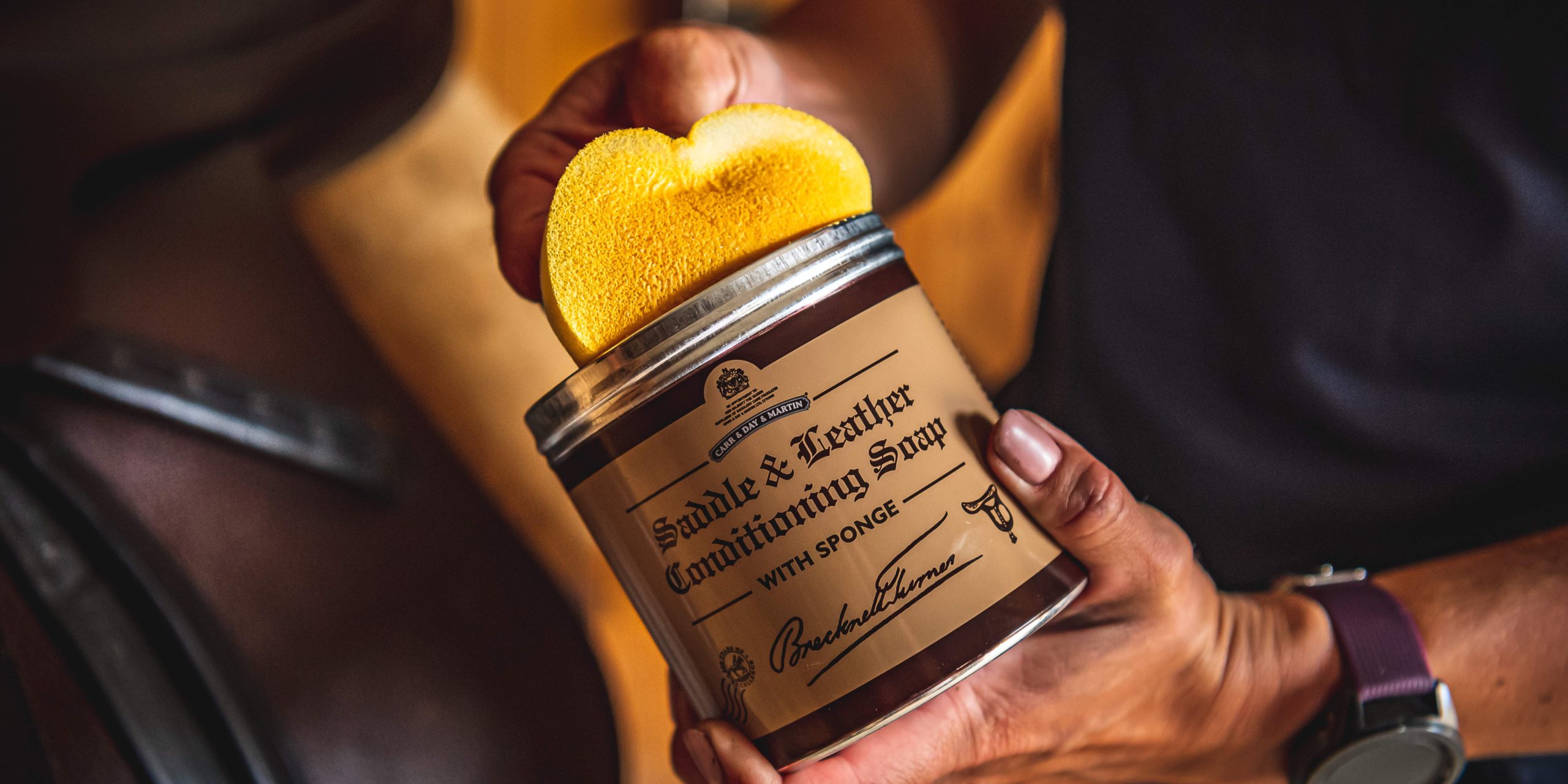
Brecknell Turner Conditioning Saddle Soap is a soft, blended leather soap with a slightly thicker consistency, designed to deeply clean and condition your saddle and tack. Unlike glycerine-based products, this saddle soap does not leave a glossy or shiny finish. Instead, it provides a highly desirable matte finish, making it perfect for leather used in the show ring.
This conditioning saddle soap is ideal for riders looking for a clean, polished look without the shine, helping your leather maintain a classic, professional appearance. Each tin includes a convenient sponge for easy application and effective cleaning.
Option-C
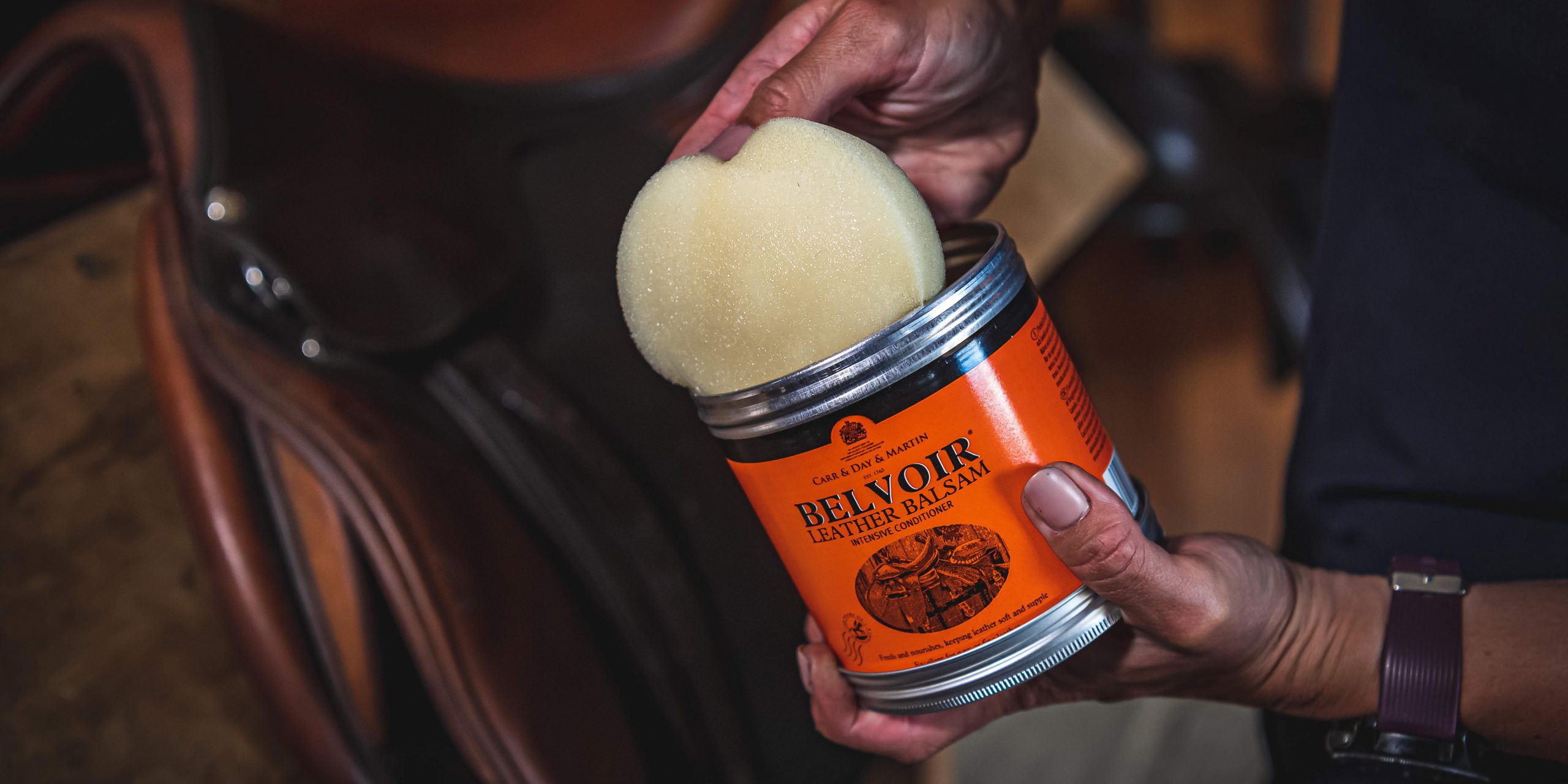
Belvoir Leather Balsam contains nourishing lanolin and beeswax, designed to feed and gently condition your leather tack. The soft wax formula lightly oils the leather, helping to keep it soft, flexible, and supple over time.
Ideal for use between applications of heavier replenishing oils, this conditioner works especially well on new leather and finer leather items, providing gentle care without over-saturating.
Each tin includes a sponge for easy and even application. As with all leather care products, avoid over-application to prevent build up, and always do a patch test.
How to Care for New Leather Saddles and Bridles
Investing in a new leather saddle or bridle is exciting—but proper care from day one is essential to ensure its longevity and performance. New leather tack often feels stiff at first and benefits from light oiling before use.
Preparing New Leather for Use
New saddles and bridles may arrive with a protective finish or pre-oiled. If your leather item has a coating, clean it gently to remove any residue before applying leather oil. Always identify the type of leather and its finish before beginning any treatment.
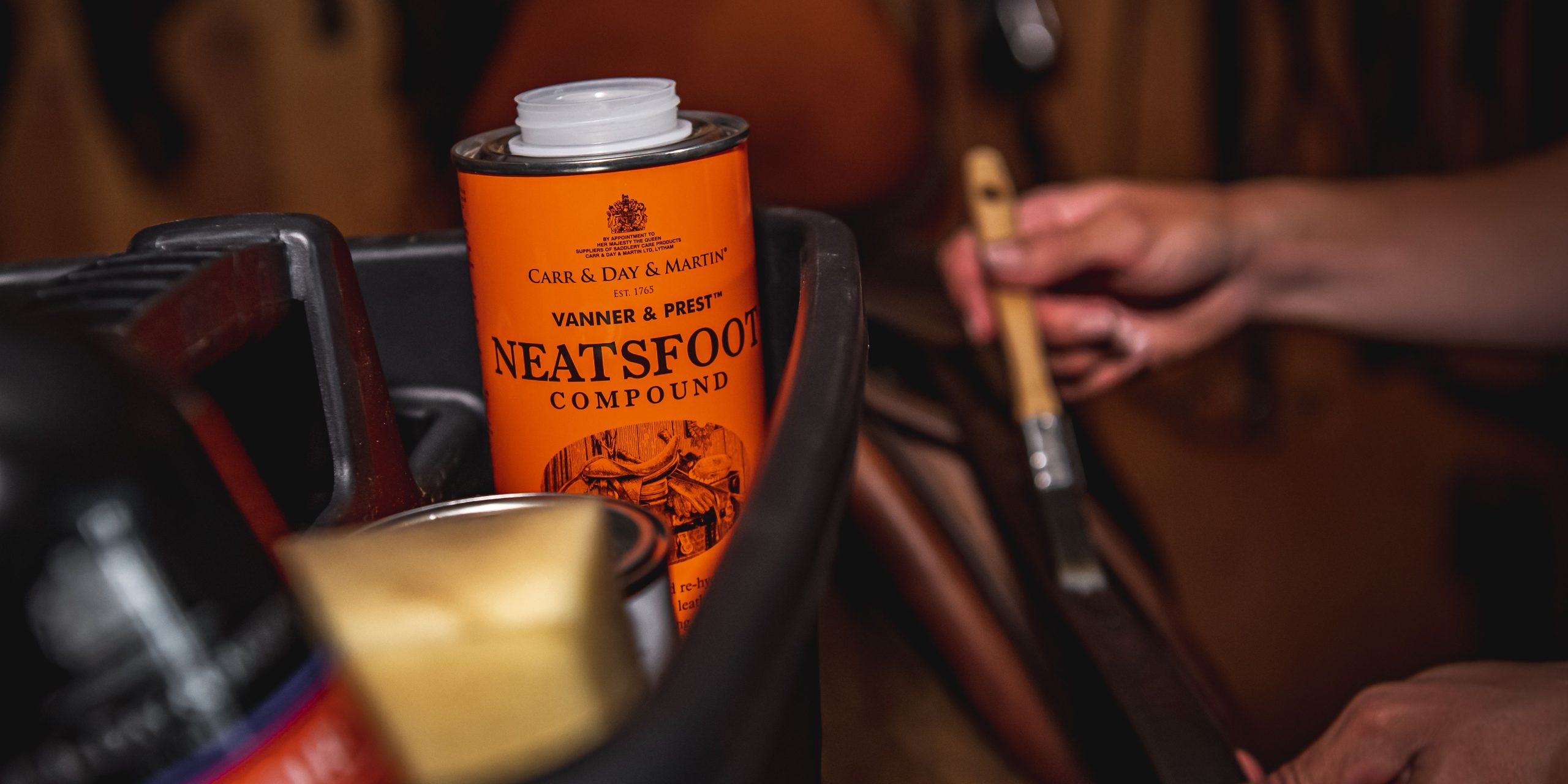
Using Neatsfoot Compound
Neatsfoot Compound is ideal for conditioning new leather:
-
Grain side: Apply a thin layer evenly.
-
Flesh side (underside): Apply two thin layers for deeper penetration.
Avoid over-oiling, especially on stirrup leathers, as excess softness can lead to stretching and wear.
When to Reapply Oil
Reapply Neatsfoot Compound whenever the leather feels dry or stiff. Regular conditioning will help the leather stay supple and resilient.
Adjustment After Use
As new leather softens and breaks in, it will ‘give’ slightly. This means minor fitting adjustments to your saddle or bridle may be necessary after a few rides.
Caring for Saturated Leather
Prevention and Proper Maintenance
Prevention is always better than cure when it comes to wet leather tack. Avoiding water exposure is key to protecting the delicate fibre structure of your saddle and bridle but that is not always possible when the rain comes down.
Why Water Damages Leather
When leather becomes soaked, the inner fibres stretch to absorb moisture, weakening the leather’s natural strength and structure. As it dries, essential conditioning oils evaporate along with the water, causing fibers to clump and stick together. This results in leather that feels stiff, dry, and prone to cracking.
How to Care for Wet Leather Tack
To minimise damage after your leather gets wet:
-
Wipe off dirt and mud immediately, before it has a chance to dry and harden.
-
While the leather is still damp and permeable, apply a light conditioner such as Belvoir Leather Balsam or a very sparing amount of Neatsfoot Compound. This helps replace lost oils and keeps the leather supple.
-
Dry leather naturally, away from direct heat sources like radiators or fires. Rapid drying can cause leather to shrink, crack, and lose its oils prematurely.
Additional Tips to Protect Your Leather
-
Use a waterproof saddle cover to shield your tack from rain and moisture.
-
Be cautious of colour transfer from waterproof jackets or riding chaps, which can stain saturated leather more easily.
By following these care tips, you can prevent stiffness, dryness, and watermarks, extending the life of your leather tack.
Revitalising Dry & Cracked Leather
Leather contains moisturising and lubricating oils which were added in the tanning process. These oils are gradually lost as the leather is used. The once plump and flexible fibres of leather gradually become thinner and more rigid.
Instead of flexing and stretching, the fibres become tight and stiff. In a similar fashion to bending a piece of metal repeatedly, they will eventually weaken and break, causing cracks.
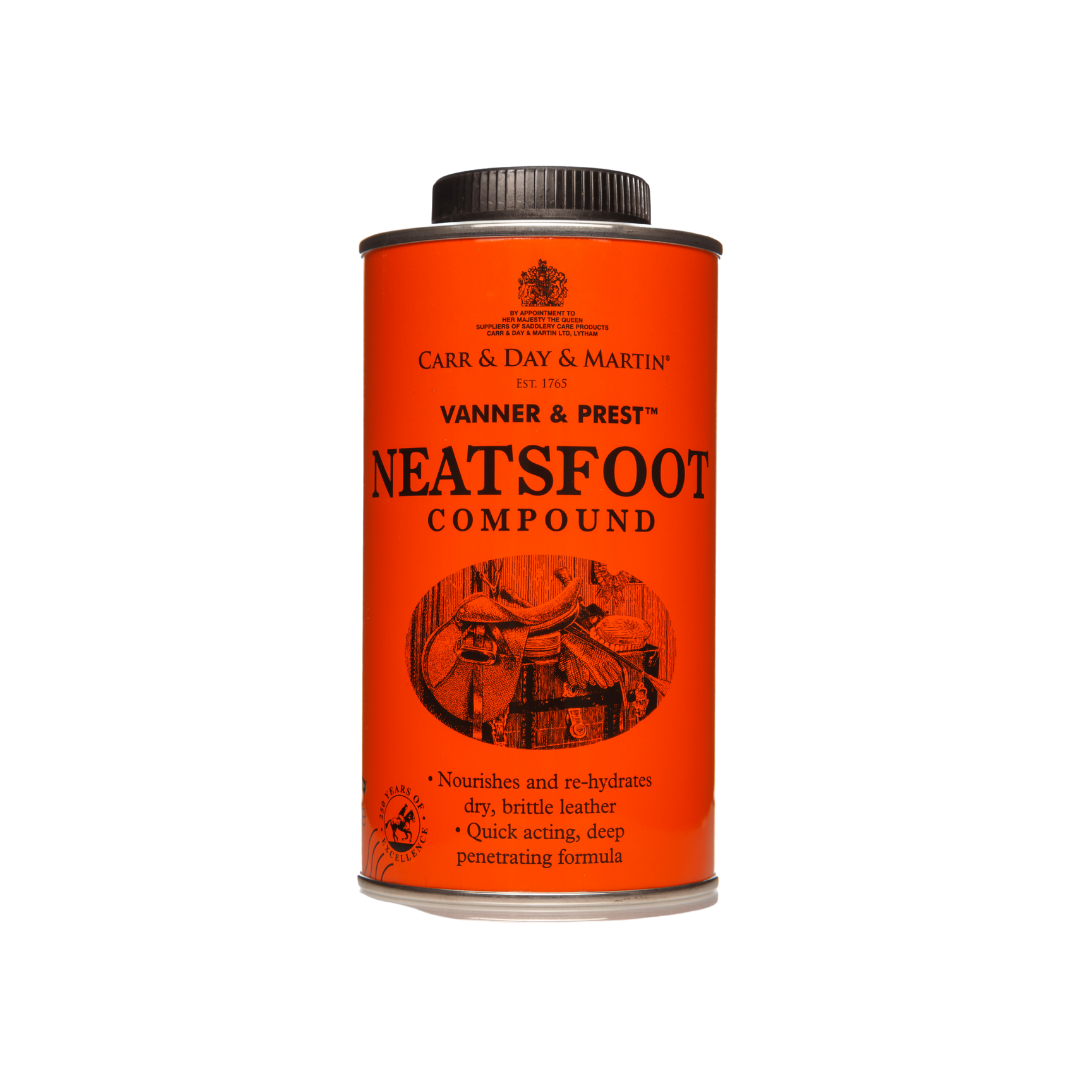
NEATSFOOT COMPOUND
Using an oil such as Neatsfoot Compound will revitalise the fibres in the leather so that they can move freely again, much like oiling an engine.
As a guide, apply one or two thin layers to the absorbent flesh side of the leather. The leather will become strong again, less brittle and less likely to snap.
CARRS LEATHER OIL
For excessively dry leather or leather in need of revival, an intensive conditioning oil such as Carrs Leather Oil is more appropriate.
Apply a thin coating to the flesh side of the leather and allow to soak in for at least 24 hours. Particularly dry tack may benefit from a thin, additional coating applied to the grain side, which will also help to restore the colour.
If the leather still appears dry another application may be required, however take care not to over oil, wiping off any excess as it cannot be removed once absorbed.
Over oiling ‘collapses’ the structure of leather, leaving a slick, oily feel. So little and often is more effective than a thick application.
Although cracks cannot be repaired, their appearance can be minimised by oiling and conditioning.
Treating Mould and Mildew
Mould and mildew thrive in warm, dark, damp conditions. They penetrate deep into the fibre of the leather which can weaken them and cause permanent damage. Be aware that if leather is poorly stored mould and mildew can grow very quickly.
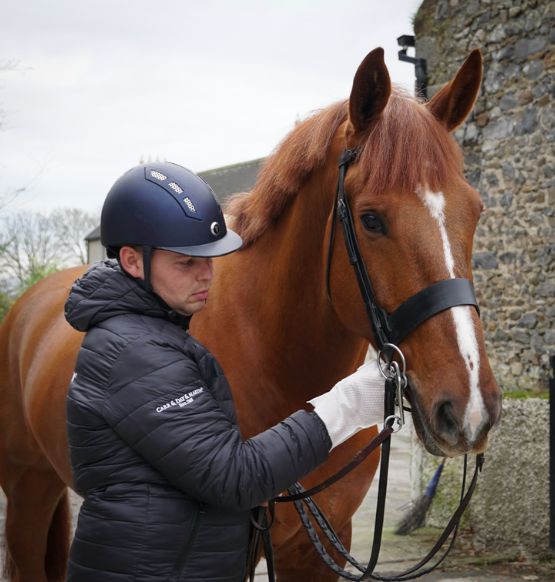
Any such mouldy leather should be immediately removed from the tack room to prevent the spread of spores to other saddlery items. Wipe away the mould and mildew with a Belvoir Tack Cleaner Mitt taking care to dispose after use to prevent further contamination.
Then clean with Belvoir Tack Cleaner Spray to help prevent the regrowth of mould and mildew. Use an old toothbrush to clean stitching and awkward places, and condition as normal. If a saddle has been badly affected by mould and mildew, some staining or mottling may remain. Whilst this cannot be removed, it may with correct care fade over time.
Mould and mildew penetrate leather to its core and so are impossible to remove entirely. However, spores will remain dormant if the correct preventative measures are taken.
Try to keep your tack room dry and light, perhaps using some low level storage heating, or a dehumidifier and wipe your tack everyday after use with Belvoir Tack Cleaner Mitt.
It is also important to remove any damp saddle cloths, numnahs and girths, as they should be left to dry away from tack.
Storage
To maintain leather integrity, optional storage conditions are essential.
The tack room should be dry and a consistent room temperature with good ventilation is ideal. High temperatures will cause protective oils and moisture to be drawn out of the leather. It is also important to protect leather from direct sunlight and fluorescent light, as this can cause premature ageing and fading.
Tack should ideally be stored off the ground, and saddles should be placed on saddle racks to preserve their shape.
Using a saddle cover protects it from dust, debris and accidental scratches. However, do not use plastic or waterproof covers as they can encourage the ‘moist’ conditions which attract mould. A breathable saddle cover is preferable and cotton is ideal.
If tack is not going to be used for some time, it should be carefully stored to preserve its condition. Leather straps are best stored flat so bridles and leathers should be taken to pieces and stored unbuckled.
The leather should be thoroughly cleaned first but not conditioned.
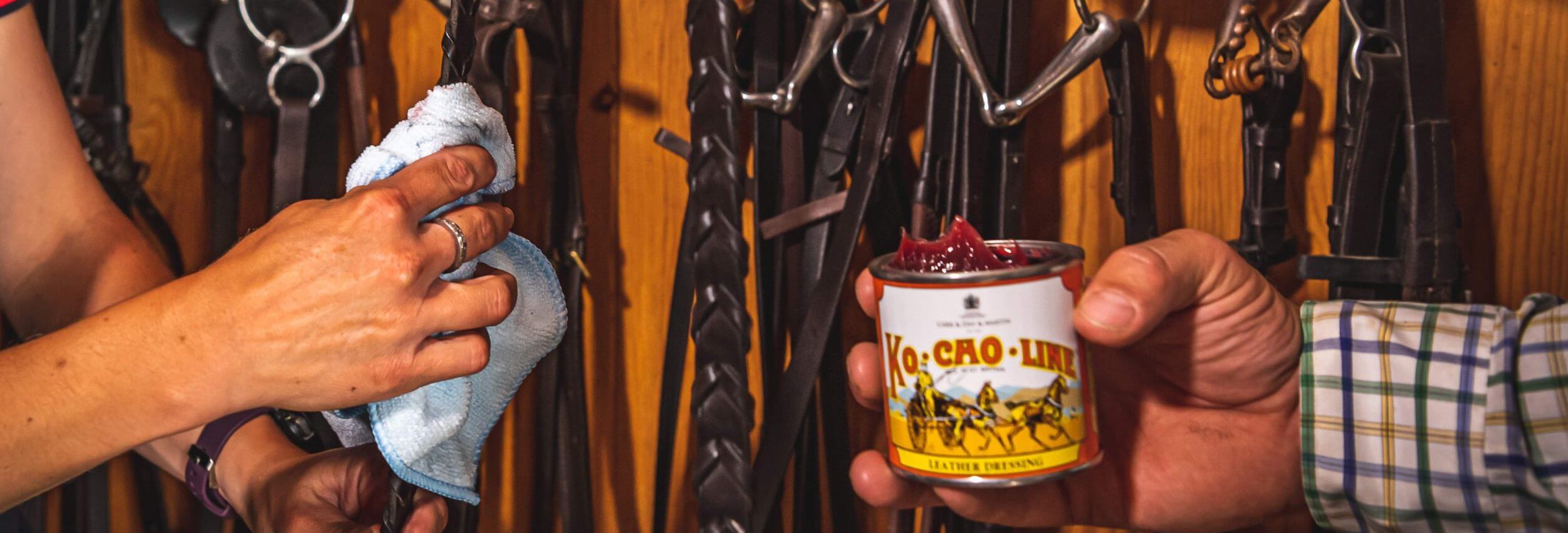
When completely dry, a protective barrier of KO-CHO-LINE should be applied, on both sides of the leather. This will protect from moisture, heat and mould. Buckles should also be coated to help prevent rust.
Once KO-CHO-LINE has been applied, items should be wrapped in cotton fabric, such as an old pillowcase, and stored in the tack room or other suitable area.
Items in storage should be periodically checked to ensure they are still in good condition.
When the item is required for use again, thoroughly remove the protective grease with a cloth, then clean and condition as normal.
Keep it simple
So, now you know all you need to know about caring for leather – we hope we’ve made it easy to understand? If you’re still unsure or concerned, either call or email us.
7 Essential Leather Tack Care Tips To Remember
Proper care of your leather tack ensures it stays durable, comfortable, and looking great for years. Here are 7 key tips for maintaining your saddle, bridle, and leather tack:
-
Identify Your Leather Type
Before starting any care routine, find out what type of leather your tack is made from. Different leathers require specific cleaning and conditioning products. -
Follow Manufacturer Guidelines
Always read and adhere to the manufacturer’s care instructions and check your product guarantee for recommended maintenance. -
Oil Dry or Cracked Leather Sparingly
When revitalizing dry or cracked leather, apply oil lightly, wait for it to absorb, then repeat as needed. Avoid over-oiling, as this can cause permanent damage. -
Store Tack Properly
Store your leather tack in a cool, dry place to prevent mould and mildew growth, which can weaken the leather fibers. -
Avoid Direct Heat for Drying Wet Leather
Never dry saturated leather near radiators, heaters, or fireplaces. Clean and condition leather while still damp, then allow it to dry naturally. -
Clean Tack After Every Ride
Wipe away sweat, grease, and dirt after each use to prevent buildup and make deeper cleaning easier. -
Deep Clean and Condition Regularly
Take your tack apart and thoroughly clean all parts at least every five rides. This removes hidden dirt and grease from hard-to-reach areas. Finish by applying a conditioner to keep leather soft, supple, and protected.
Saddles and bridles represent a big investment and are an essential piece of kit. Look after them and they will keep their value and last for years.
Caring for your tack doesn’t have to be time consuming, we’ve made it quick and easy with our Cleaner and Conditioner; is there any excuse for dirty tack?
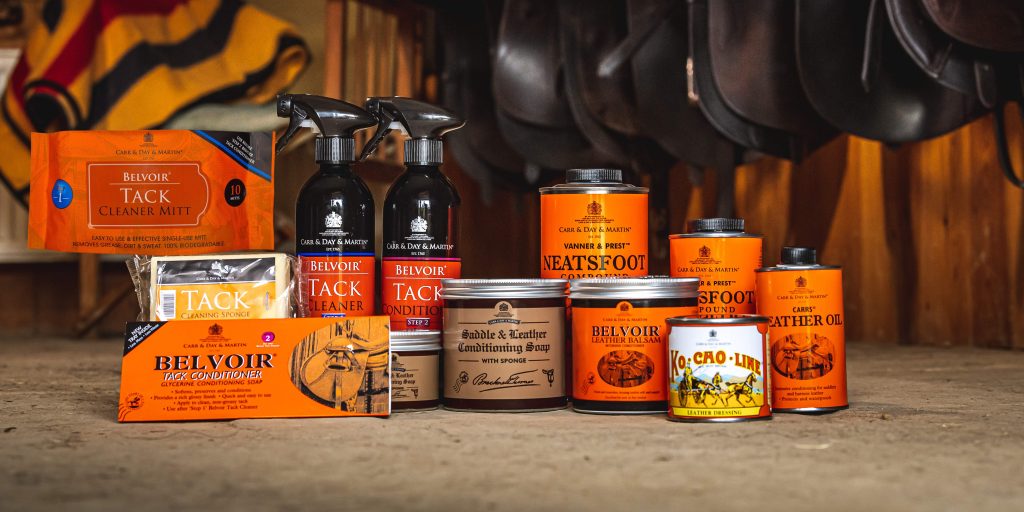
View our full Leather Care range